A welcoming practice, grounded in care.
The Healing Initiatives was founded by a trauma-informed educator holding a Master of Education with a specialization in Trauma-Informed Care Educational Practices from National University in San Diego, California. Every program is built on five principles that keep our work honest, safe, and welcoming for people of all ages — with trauma-informed care as part of the approach, not the whole story.
The Healing Initiatives, Incorporated makes total health accessible to all through a creative lens. Through welcoming, low-barrier, trauma-informed expressive arts, mindfulness, wellness education, family-centered support, educational advocacy, and resource navigation, THI helps children, youth, adults, caregivers, and families ground, recalibrate, express themselves, rebuild trust and stability, and move from surviving to thriving. We honor every person’s story without judgment, exclusion, or defining anyone solely by trauma—because healing is not a privilege; it is a community responsibility.
We envision a future where total health is accessible to every person and family—regardless of age, income, insurance, diagnosis, life history, or starting point. In that future, creativity gives voice to what cannot always be spoken, community and trust reach people before crisis, stability replaces survival, and no one is judged, turned away, or left to heal, recalibrate, or rebuild alone.
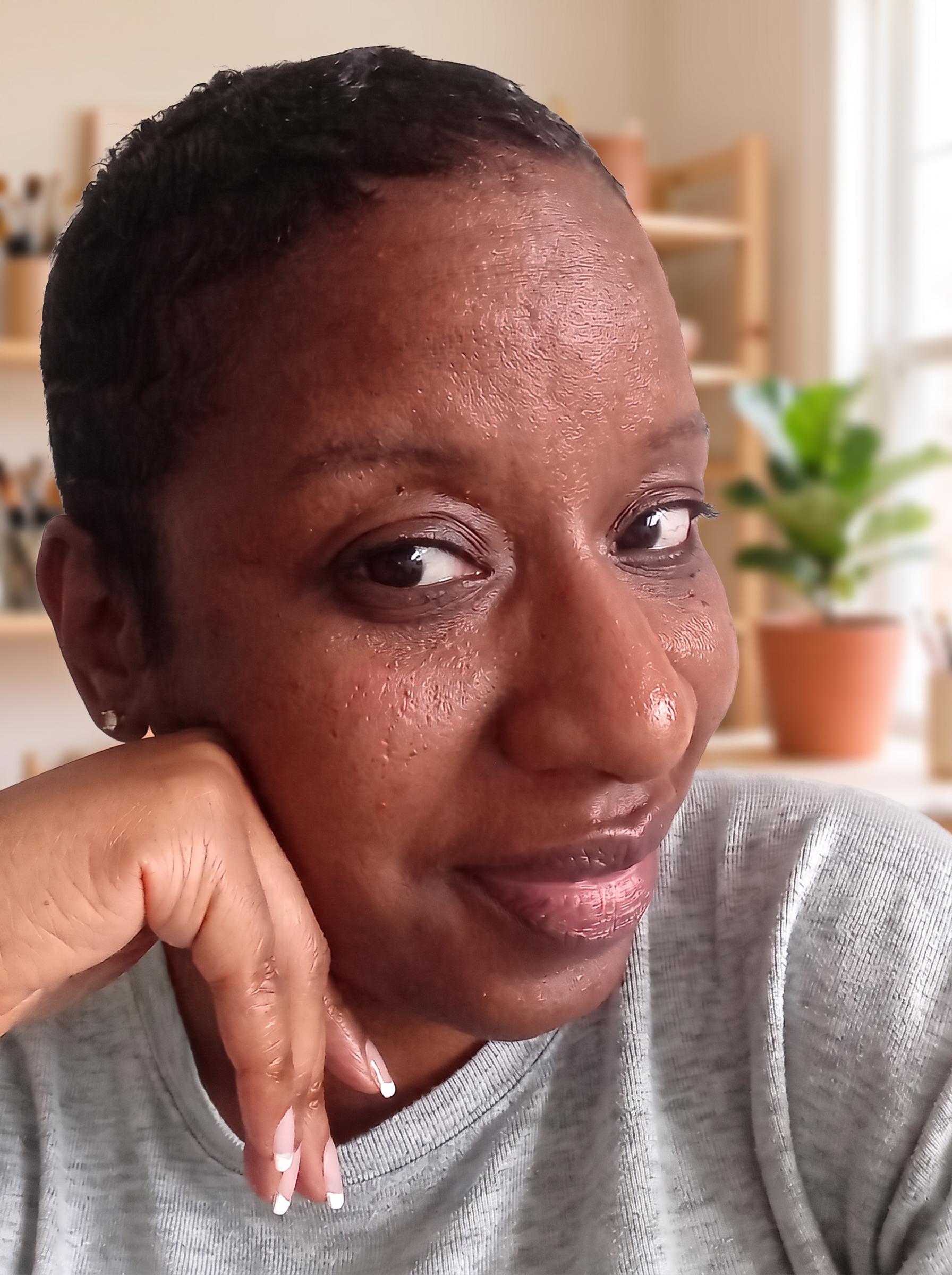
Shantelle L. Fuller, Founder & Trauma-Informed Educator
Shantelle founded The Healing Initiatives to hold the space she couldn't find as a young educator: one where the arts and trauma-informed care sit at the same table, and where children, families, and adults can be met exactly where they are.
She holds a Master of Education with a specialization in Trauma-Informed Care Educational Practices from National University in San Diego, California, and brings more than ten years of experience in special education to the design of every class, workshop, and residency. That background shapes how THI paces a room, offers choice, and builds programming that welcomes a wide range of learners and needs.
Shantelle is also a studio artist and a member of Art Impact International, headquartered in Washington, D.C., where she exhibits work exploring socioeconomic injustice, cultural awareness, pride, and understanding. Her conviction: healing doesn't require perfect words. It requires a safe room, honest materials, and someone who will not look away.
"Healing begins with naming what needs tending — a trauma, a season of stress, a place of misalignment, or simply a longing to feel whole again. Our job is to build the room where that becomes possible."
THI's five trauma-informed program principles.
Not a checklist — a way of being with people. These pillars shape how every THI facilitator holds a room, from a first-grade classroom to a corporate offsite.
- 01
Safety
Every space we hold — studio, classroom, retreat — is designed for physical and emotional safety first. Predictability, clear boundaries, and consent aren't afterthoughts. They're the foundation.
- 02
Trustworthiness & Transparency
We do what we say we'll do. Program expectations, decisions, and outcomes are shared openly with participants, partners, and communities — because trust is built one honest interaction at a time.
- 03
Choice
You choose the medium, the depth, the pace. Trauma robs people of agency; our practice returns it. There is always a way to opt out, opt in differently, or invite something new.
- 04
Collaboration
Healing is not something done to you — it's co-created. Facilitators, participants, families, and community partners share power over how programming unfolds.
- 05
Empowerment
We build on strengths, not deficits. Programs surface each person's existing capacity to create, to speak, to move — and reinforce it as the engine of lasting change.
- In practice
See the pillars at work.
Join a class, book a session, or partner with us on a residency — every offering is built on this foundation.
Adapted from SAMHSA's Guidance for a Trauma-Informed Approach and refined through Shantelle's classroom, studio, and community practice.